NEW YORK 2026 · WELLNESS COMMUNITIES
Age-Friendly Design: Independence, Comfort and Connection
A broader view of wellness begins with the freedom to move, participate and remain connected as needs change. Design has a practical role in that freedom.
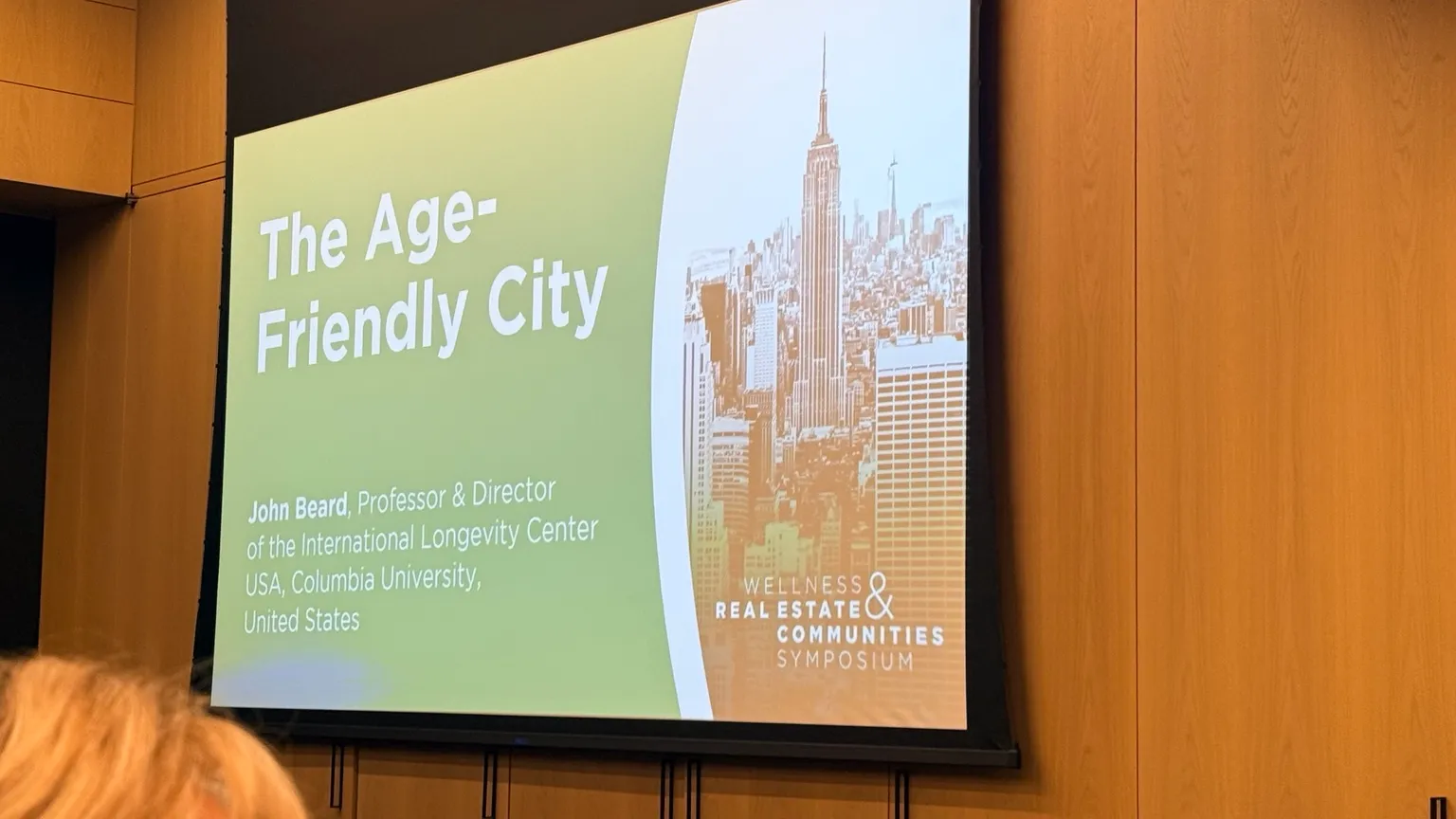
The ability to move through a place with confidence is an essential part of its quality. A clear route, a comfortable place to rest and an invitation to participate can influence whether a setting feels available to someone. These details become especially significant when mobility, energy or sensory needs change.
John Beard’s discussion of the age-friendly city at the New York symposium brought attention to that everyday freedom. His account emphasised the value of working with communities to understand their circumstances, rather than assuming that one model could serve every place. For hospitality and residential design, the principle has immediate relevance: understand the people and the setting before defining the response.
Begin with participation
The World Health Organization’s age-friendly approach brings physical access together with inclusion and social participation. Its guidance describes a process of listening, planning, taking action and evaluating progress with older people and other stakeholders.[1, 2]
Applied to a project, this means asking more specific questions about use. Where does a route become tiring? Which entrance feels easiest to navigate? Is there somewhere to wait comfortably without feeling removed from the activity around it? What makes a communal space welcoming to someone arriving alone?
Such questions benefit from direct observation and conversation. A floor plan can show distance, while a walkthrough may reveal hesitation, an awkward threshold or a place where a seat would be useful. The findings can then inform decisions about layout, furnishings and service.
Comfort without unnecessary effort
Within an interior, independence often depends on small relationships. A chair should suit the intended users and its purpose. A table needs to be within useful reach. Lighting must allow people to read the room and carry out the activity for which it was designed. The route to an amenity should remain understandable when the building is unfamiliar.
These considerations can be integrated into a refined material and architectural language. Clear circulation, appropriate contrast and varied seating conditions can be developed as part of the composition. The objective is a setting whose use feels natural and whose character remains intact.
Choice also matters. Someone may want to join a conversation without sitting at the centre of a group. Another person may prefer a quieter edge with a view of the activity. Offering both conditions gives a shared space more ways to welcome participation.
The wider setting shapes the opportunity
The symposium’s regional case studies extended this discussion beyond individual buildings. GWI researchers Katherine Johnston and Ophelia Yeung presented projects in Saudi Arabia and the United Arab Emirates, drawing on their research visits. The published collection considers sustainability, inclusion, accessibility and local context across developments of different kinds.[3]
One example, Sports Boulevard in Riyadh, illustrates the importance of the public realm. GWI’s account describes pedestrian and cycling connections, seating, planting and shaded destinations across completed and planned parts of the project. These features place everyday movement within a broader network of places to stop, meet and spend time.[4]
The transferable lesson is to examine the conditions that make an intended activity practical. A walking route needs to be considered in relation to climate, destinations, places to rest and the people expected to use it. A beautiful path offers limited value if its daily use has not been thought through.
Connection needs a setting
Community is often described as a project ambition. Design can give that ambition a more tangible form. A small table near a shared entrance, a comfortable waiting area or a garden with several seating arrangements can create opportunities for ordinary encounters. Their usefulness depends on location, comfort and the way they are operated.
Privacy belongs within the same conversation. A resident should be able to enjoy a shared setting without being obliged to join every activity. A guest should be able to find a quieter place without leaving the social life of the property entirely. The relationship between participation and retreat can be developed deliberately.
For a luxury project, this is an opportunity to extend attention to detail across a wider range of experiences. The journey from room to restaurant, the accessibility of a terrace and the ease of spending time alone all deserve review. These are aspects of hospitality that continue to matter across different ages and circumstances.
SOMA’s perspective is grounded in that continuity of use. A place should be considered through the lives it accommodates, including the changes those lives may bring. Thoughtful planning, consultation and observation can help create settings where independence and connection remain available together.