PRAGUE FIELD NOTES · DESIGN LONGEVITY
Luxury Hotel Interiors That Last: Designing for Durability and Renewal
A practical reading of the Prague conversations on resilience: preserve what works, plan for maintenance and make thoughtful renewal possible.
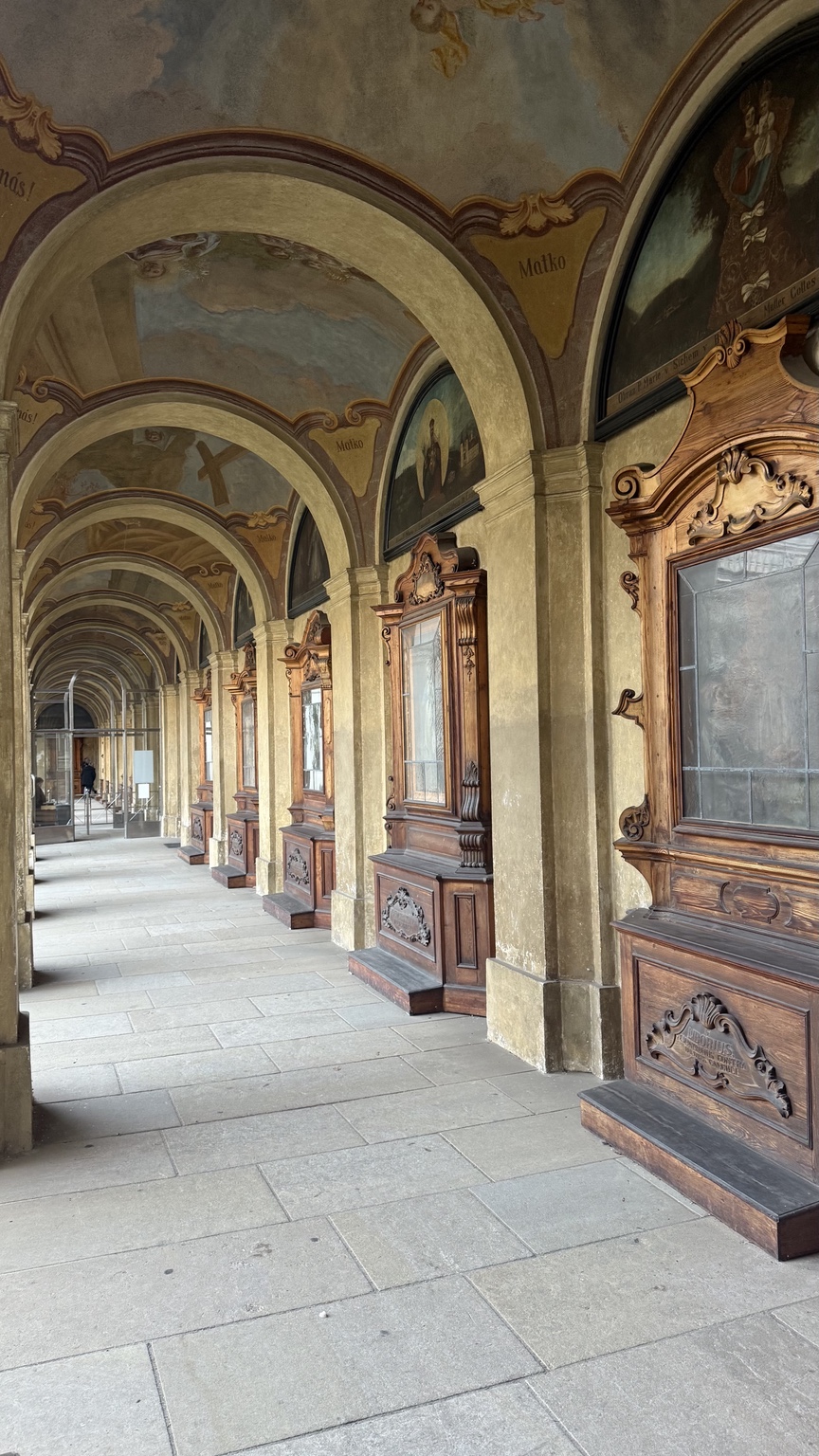
In the Prague discussions about resilient hotel design, the question of time kept coming back. What should remain? What can change? How can an interior continue to feel relevant without being stripped out whenever tastes shift?
Those questions connect sustainability with the everyday reality of operating a luxury hotel. An interior has to withstand use and maintenance while retaining the character that made it worth investing in. My reading of the INSPIRE 2025 conversations is that durability and renewal need to be considered together, from the first brief.
Begin with an assessment of what is already valuable
In a renovation, I would first want to understand the building, the existing interior and the experience associated with it. Original features, good proportions, useful joinery and materials that still perform can be assets. Their condition and suitability need to be assessed before replacement becomes the default.
My photograph of a historic Prague passage illustrates why this question matters to me. Repetition, worn surfaces and detailed woodwork give the space a recognizable character. The image does not tell us how the building is maintained, but it prompts a useful design question: what would be lost if every visible trace of time were removed?
For a hotel, that assessment should also include guest use, accessibility, building services and the operator’s experience. Retention is most useful when the retained elements can continue to serve the project.
Distinguish the enduring base from the layers that can change
Some decisions are difficult and disruptive to reverse: room relationships, bathrooms, fixed joinery, service access and major lighting infrastructure. Others are more adaptable, such as selected textiles, artwork, loose furniture and decorative objects.
This does not mean the permanent elements must be neutral or anonymous. It means their character should be strong enough to support more than one future arrangement. A distinctive architectural rhythm or a well-resolved material junction may remain convincing while other layers evolve.
In a brief, I would record which elements are intended to endure and what kinds of change they should accommodate. That makes the renewal strategy visible before procurement begins.
Specify for use, care and repair
A material sample is only the start of a decision. Where will the material be used? How often will it be touched or cleaned? Can a damaged section be repaired? Will a replacement be available in a compatible finish?
These questions are especially relevant to high-contact areas, seating, wet spaces and luggage routes. The facilities and housekeeping teams can identify conditions that are easy to overlook during concept design. A finish that needs a care process the hotel cannot sustain is a weak fit, however compelling it looks initially.
Mock-ups and sample testing should reflect the intended use. Procurement discussions should include care instructions, spare parts, lead times and the availability of replacement components. Claims about environmental performance deserve product-specific evidence.
Give water and maintenance access a place in the conversation
The sustainability discussions in Prague included the practical role of water and hotel operations. From an interior designer’s perspective, bathrooms are an important point of coordination: fixtures, access panels, surfaces and the spaces around equipment all affect how a room can be maintained.
Technical performance, waterproofing and system selection need the appropriate specialists. The interior brief can help by treating access and maintenance as design conditions, rather than details to conceal late in the process.
Use brand standards to clarify the promise
A brand standard can establish consistent expectations for function and comfort. A local design response can give those expectations a specific expression. The two need to be discussed together.
I would separate the requirement from one possible visual solution. A working surface, for example, needs to suit the guest’s use, lighting and power requirements. Its form and material can still respond to the property. This leaves useful room for design while keeping the operational purpose clear.
Plan renewal before the opening photographs
A renewal plan can identify the elements most likely to need attention, the records the operator will require and the decisions that should remain coordinated as replacements occur. It can also preserve the logic of the original palette, so that later purchasing does not gradually turn a coherent room into unrelated parts.
Keeping something longer is not, by itself, proof of a lower environmental impact. Manufacturing, maintenance, energy use and end-of-life decisions also matter. Durability is one practical design contribution within that wider assessment.
For me, the most useful outcome of the Prague conversations is an interior brief that anticipates life after opening. Read the wider INSPIRE Prague field notes, or explore how SOMA supports hospitality interior planning, materials and furnishing direction.
About the author: Tatiana Mozerova is the founder of SOMA Design Studio in Charlotte, North Carolina. Her work brings interior design, spatial experience and material direction together through the studio’s Quantum Architecture™ approach.