Spatial experience — editorial essay
The architecture of arrival
A place begins before the doorway. Its first moments prepare us for everything that follows.
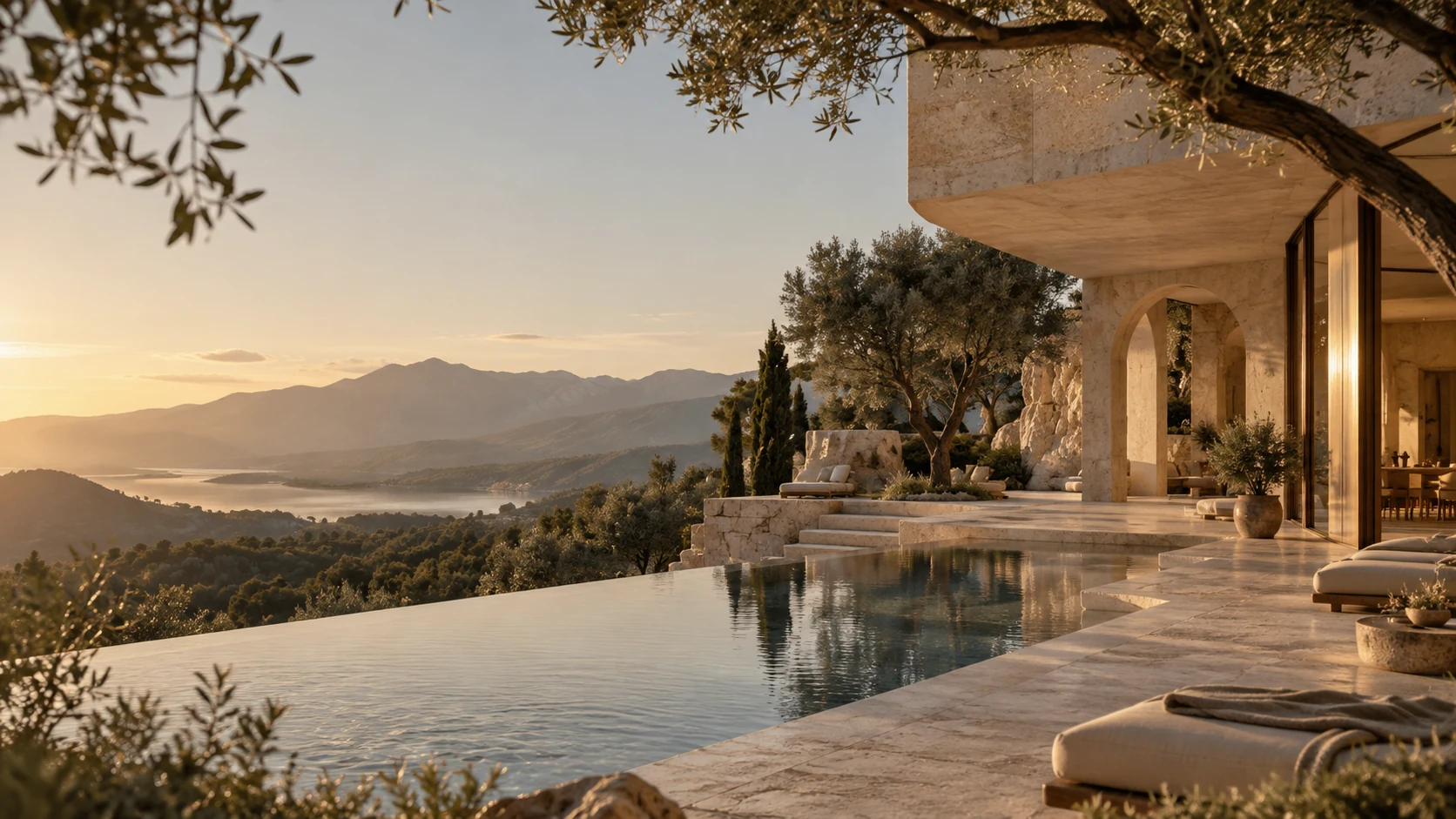
In every hospitality experience, there is a moment of transition. The world we came from recedes. Another atmosphere begins.
We often begin conversations about design with a floor plan or a mood board. Yet a guest's experience may begin much earlier: on the approach road, in the landscape, at the threshold, or in the first view across a courtyard.
The sequence is part of the design
Arrival deserves the same intentionality as a beautifully resolved interior. Movement from open to enclosed, bright to shaded, active to quiet can establish rhythm and give the visitor a sense of orientation.
For a retreat center, that might mean considering the relationship between guest arrival and spaces dedicated to silence or restoration. In a private residence, it might be the way a foyer opens gradually toward natural light. In a small guest property, even a clear and welcoming entry sequence can make the entire experience feel more deliberate.
Begin with a question
Before choosing materials or detailing an entrance, ask: How should someone feel when they arrive? Welcomed? Calm? Curious? Energized? The answer will help guide spatial decisions, rather than leave the desired experience to chance.
This is one way we think about intentional space at SOMA. Not as an aesthetic formula, but as a series of thoughtful decisions about how a place is experienced.